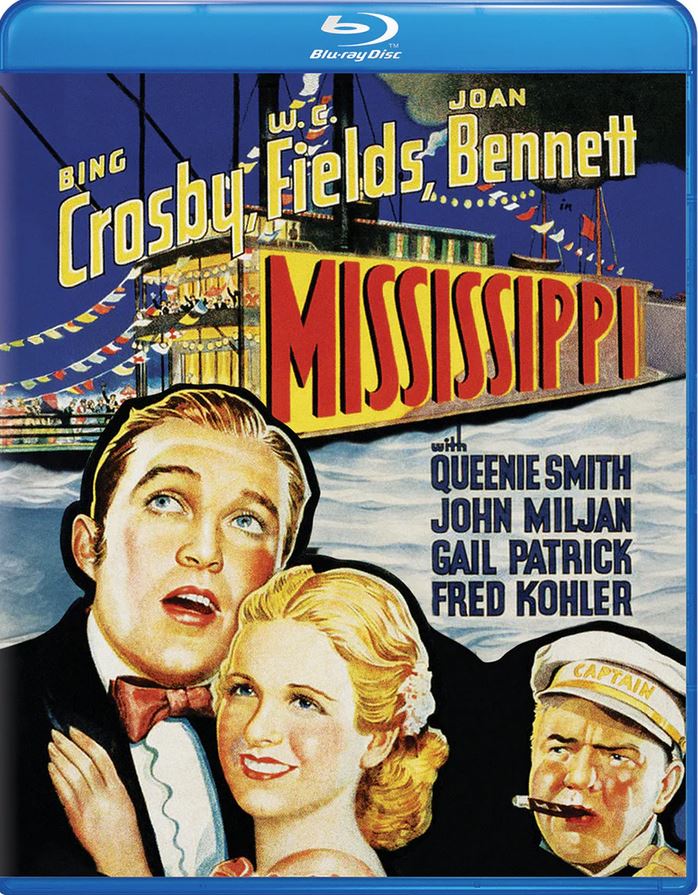
Mississippi
73 min. / B&W / 1.33:1 / SDH
Universal BD $21.98
Available from our partner MovieZyng
As it turns out – thanks to a plethora of new releases from Universal and MovieZyng – we have the unprecedented opportunity of hosting a W.C. Fields Marathon in the Balcony, with four new reviews!
Poke around, you’ll also find reviews of The Big Broadcast of 1938, International House, and Million Dollar Legs.
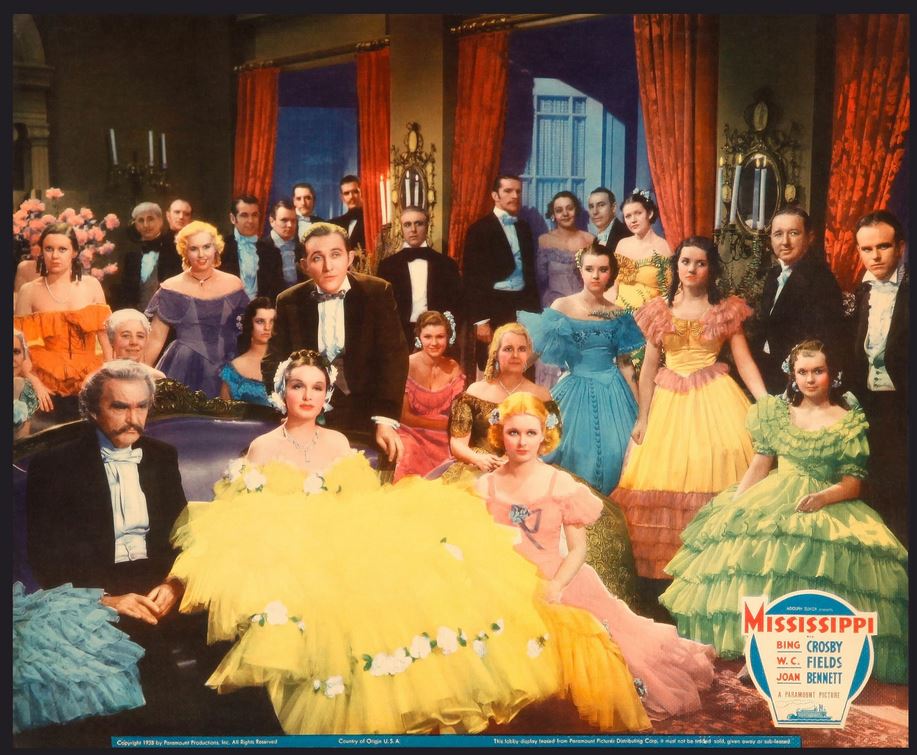
W.C. Fields is a riverboat captain about a Mississippi showboat with lots of pretty girl entertainers and the Cabin Kids, soon to be famous for appearing in a couple of Our Gang pictures. He lacks a male singer, though, and it just so happens that Bing Crosby is a transplanted Northerner who isn't getting along too well with his Southern plantation-owning father-in-law-to-be, mainly because Bing’s a crooner, not a fighter, and frankly his fiancé’s a nightmare anyway. One thing leads to another, and Bing finds himself singing about the showboat billed as "The Notorious Colonel Steele, Singing Killer". Eventually, he finds his way back to the plantation and marries the nightmarish ex-fiancé’s little sister, lovely Joan Bennett. That's mostly pleasant enough in the Crosby way, but the film really takes off with Bing singing the standard Easy to Remember, the Cabin Kids performing, and of course any scene with W.C. Fields, who unsurprisingly walks off with the picture as he binge-drinks mint juleps and drops the story of his days as an Indian fighter to anyone within earshot.
Mississippi Dialog:
Woman passenger, listening to his Indian Fighter story: "You must've been full of FIRE in your youth!"
Fields: "I had to carry fire insurance until I was over forty."
Fields to pianist: "What's that tune you're playing?"
Pianist: "It's new, Commodore. They call it Swanee River."
Fields: "It's no good, it'll be forgotten in two weeks. People can't remember the tune." (Uncle Bill spends the rest of the picture humming the tune, of course.)
1934 had been a busy year for Mr. Fields; he'd filmed You're Telling Me!, The Old Fashioned Way, Mrs. Wiggs of the Cabbage Patch, It's a Gift, and David Copperfield. As fall turned to winter, he was welcomed back to Paramount from MGM with a script for a third version of Booth Tarkenton's Magnolia, to feature radio singer Lanny Ross in a supporting role. For reasons unknown, Ross was dropped and Paramount star Bing Crosby substituted, meaning last-minute rewrites to accommodate a star much bigger than Ross - to Fields' chagrin. Not only that, but Crosby wasn't enamored of the role, and often made excuses not to show up at the studio. Fields hated the script and ad-libbed his way through it – as was his wont - as the studio's producers, the director, and the editor tried to figure out a way to balance the footage. During filming, both It's a Gift and David Copperfield were released to big box office and excellent reviews, which no doubt bolstered the Great Man's feelings and clout.
In the end, neither Bing nor Bill were pleased with how Mississippi turned out, but business was excellent, which is what mattered, naturally. Director Sutherland later gave Fields praise for tossing the script and ad-libbing most of his lines.
Bill returned home to work on his next script; he was intent on calling it The Flying Trapeze because it wasn't a circus picture.
W.C. Fields deserves the love and attention that Mae West got with a huge Indicator boxed set, but we’re happy to have his films available in new bare-bones Blu-ray editions, even unrestored. They’re not stuffed with bonus material, just laughs. Fans of Fields will be quite entertained.